

Anthropic Acquires Computer-Use AI Startup Vercept After Meta Poached One of Its Founders

Anthropic has acquired Vercept, a Seattle-based startup building AI agents that can navigate and operate software autonomously: the same capability that underpins Claude’s computer-use feature. The deal comes after Meta hired away one of Vercept’s co-founders, a sequence that suggests the acquisition was partly a defensive move to retain talent and technology before a competitor could.
Computer-use remains one of the most contested surfaces in the agent race: whoever can reliably automate real software workflows at scale controls a significant share of enterprise AI value. Watch whether Anthropic accelerates its computer-use roadmap materially in the next two quarters, and whether Meta’s hire signals a similar push from that side.
Nvidia Has Another Record Quarter Amid Record Capex Spends

Nvidia posted record quarterly earnings again, with CEO Jensen Huang pointing to exponential demand for AI tokens as the primary driver. At the same time, the company is deploying record capital expenditures on infrastructure: a combination that signals either strong conviction in long-term AI economics or a buildout outpacing provable demand.
Nvidia’s capex trajectory is the closest thing the industry has to a real-time thermometer for AI infrastructure confidence. If hyperscaler spending softens in the next earnings cycle, Nvidia’s numbers will show it first. For now, the signal is clear: the people building the picks and shovels believe the gold rush has years to run.
Figma Partners with OpenAI to Bake In Support for Codex

Figma is integrating OpenAI’s Codex into its platform, following its recent partnership with Anthropic’s Claude Code. The deliberate dual-model strategy means Figma is not betting on a single AI provider: it is positioning itself as the interface layer where design intent becomes deployable code, regardless of which model does the work.
This is worth watching for what it signals about platform strategy more broadly. Figma is not trying to build its own model; it is making itself indispensable by becoming the place where competing models compete for designer and developer workflow. As we noted in yesterday’s issue, the integration race between AI labs and established software platforms is accelerating. Figma may be the clearest example of a legacy tool successfully threading that needle.
Google Takes Control of “Android of Robotics” Project in Quest for Physical AI

Google is folding Intrinsic, Alphabet’s robotics AI unit, back into the core company after five years as a standalone “Other Bets” venture. The move ends Intrinsic’s independent existence and signals that Google believes robotic systems are close enough to commercial viability to be run as a product priority rather than a research wager.
Physical AI: systems that perceive and act in the real world: is the frontier where the next several years of competition will be decided. Google absorbing Intrinsic rather than spinning it out or shutting it down suggests the robotics work has produced something worth scaling. How quickly Intrinsic’s capabilities appear in Google’s industrial and cloud product lines will be the metric to track.
Invisible Characters Hidden in Text Can Trick AI Agents Into Following Secret Instructions: Tested Across 5 Models and 8,000+ Cases
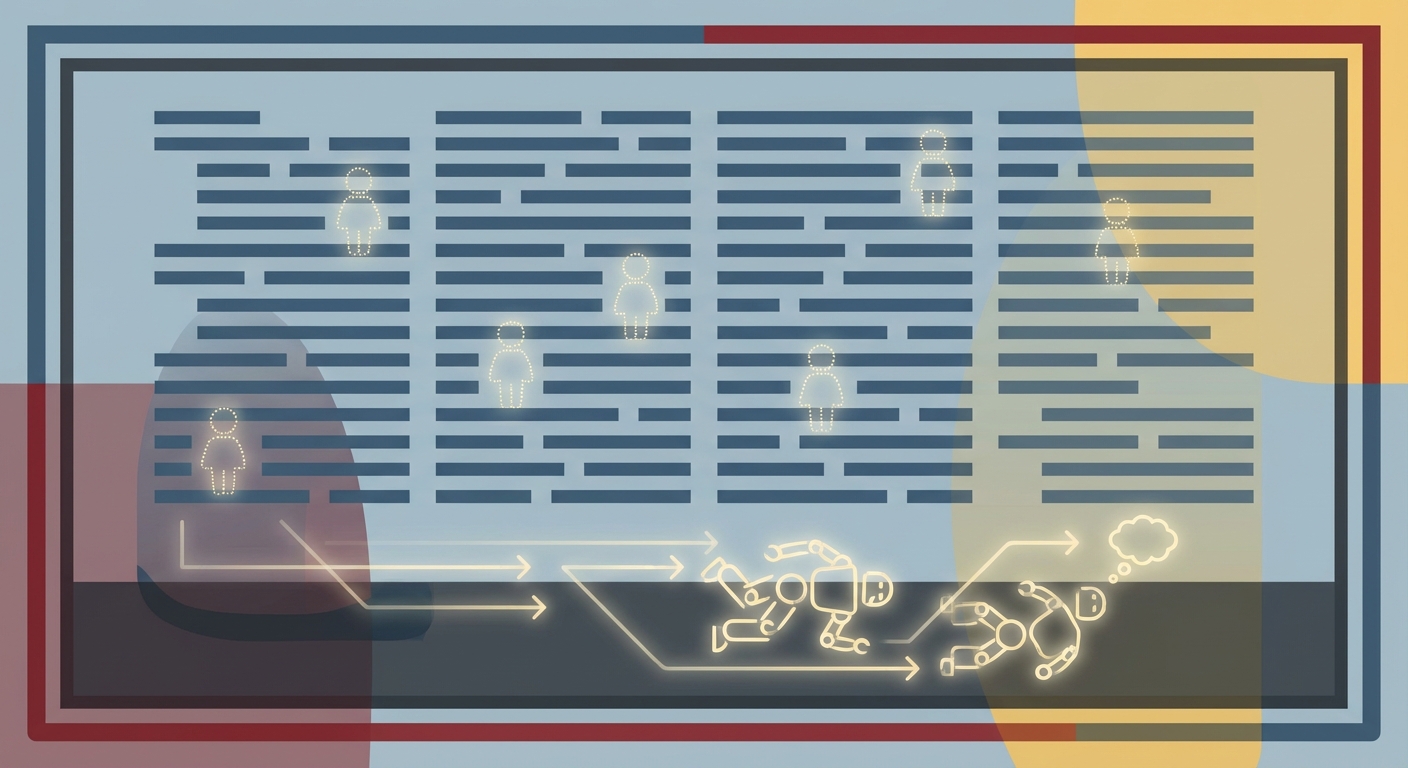
Researchers have demonstrated that invisible Unicode characters embedded in ordinary text can redirect AI models to follow hidden instructions rather than visible ones. The attack is significantly more dangerous when agents have access to tools such as code execution, where a manipulated instruction can cause real external harm rather than just a bad response.
This is a prompt injection variant that exploits a channel humans cannot see: making it exceptionally difficult to audit or catch through normal review. Any organization deploying AI agents that process external text inputs, including emails, documents, or web content, should treat this as an active exposure, not a theoretical one.
Analysis
Anthropic’s Pentagon Showdown Is About More Than AI Guardrails (5 min read)

Anthropic is in open tension with the Department of Defense over the scope of military AI deployment: a conflict that goes beyond any specific contract clause. At its core, the dispute asks whether an AI company’s stated values can survive commercial pressure from a customer that represents both enormous revenue and genuine national security weight.
The outcome matters beyond Anthropic. If the company holds its position and limits military applications, it establishes a precedent that safety-oriented labs can set meaningful constraints on government customers. If it yields, it confirms that sufficiently large contracts dissolve stated principles. Either result will shape how every other AI lab approaches defense contracting conversations that are already underway.
AI Memory Is Useful, But Only If It Goes Beyond Storing Facts (4 min read)

Most AI memory systems today are sophisticated retrieval engines: they store facts about users and surface them in future conversations. The piece argues that this is a fundamentally limited architecture: useful for personalization, but insufficient for agents that need to learn from mistakes, revise strategies, and improve over time rather than simply remember preferences.
The distinction has direct implications for anyone evaluating or building agentic systems. A memory layer that knows your name and preferred output format is not the same as one that recognizes when a previous approach failed and adjusts accordingly. The gap between those two capabilities is where the most consequential AI product work is happening right now, and it is largely invisible in vendor marketing.
Pacific Northwest National Laboratory and OpenAI Partner to Accelerate Federal Permitting (4 min read)

OpenAI and Pacific Northwest National Laboratory have developed DraftNEPABench, a benchmark designed to measure how well AI coding agents can accelerate the drafting of documents required under the National Environmental Policy Act. Early results indicate a potential 15 percent reduction in drafting time for permitting documents that typically take months or years to complete.
Federal permitting is one of the least glamorous and most consequential bottlenecks in infrastructure development. A 15 percent improvement at this stage of the work is modest, but the significance is the direction: AI benchmarks are now being built for specific, high-stakes government workflows rather than general capability measures. That shift will attract more targeted development investment and faster iteration against real institutional problems.
From the Field
OpenClaw Users Are Rebuilding Features That Already Exist

A widely circulated thread retweeted by @steipete describes a pattern that will be familiar to anyone managing AI agents in production: a developer spent weeks writing custom enforcement scripts to control agent behavior: approval gates before sending messages, schedule validation before creating cron jobs: before discovering that OpenClaw’s built-in Lobster feature already handles all of it. One line in a config file. Documented.
The problem is not the feature gap; it is the discoverability gap. As agent frameworks grow more capable, the distance between what a tool can do and what its users know it can do widens. Teams building on any agent platform right now should audit what they have built from scratch against what the framework already provides: the duplication cost is real and compounding.
A Developer Geolocated a Blurry Protest Photo Down to Exact Coordinates Using AI
A developer demonstrated their tool, Netryx, by extracting precise GPS coordinates from a low-quality video frame taken during protests in Paris. The tool works on degraded, real-world footage: not clean studio imagery: which is the condition under which most consequential visual intelligence problems actually occur.
The capability itself is the story. AI-assisted geolocation at this fidelity, available through a cloud interface, represents a meaningful shift in what individuals and small organizations can do with open-source visual data. The same capability that enables investigative journalism and humanitarian verification also enables targeted surveillance. That dual-use tension will not be resolved by the tool’s developers.
An Independent Lab Has Released the First Vendor-Neutral AI Code Review Benchmark

Code Review Bench v0 is built on more than 200,000 pull requests, uses an open-source methodology, refreshes monthly, and was built by a lab with no AI tools to sell. The last point is the one that matters most: nearly every influential AI benchmark that has shaped product decisions over the past two years was produced by an organization with a direct financial interest in the outcome.
Practitioners choosing code review tools have had to navigate marketing claims dressed as evaluations. A monthly-refreshed, conflict-free benchmark changes the terms of those vendor conversations. If it gains adoption, procurement teams will have standing to demand that vendors show their numbers against a standard they did not design.
Voices
@gregisenberg made the most clarifying point about AI pricing this week: “We’re still pricing AI tokens like software subscriptions but most companies will soon price them like labor. $200/month feels expensive because we compare it to SaaS. $50k/month will feel cheap when we compare it to headcount.” The reframe is simple and the implication is significant: the ceiling on AI spend is not a software budget, it is a hiring budget, and those are not the same number.
@ekuyda, retweeted by @steipete, observed that the AI product landscape is cycling through identical products on a one-year lag: deep research tools and browser automation in 2024, prompt-to-app builders in 2025, agent frameworks in 2026. “There’s a lot of alpha in original product thinking while big labs and many startups too are all busy building identical products.” The observation is worth sitting with. Differentiation is available precisely because most players have abandoned it.
@AIHighlight flagged the launch of Code Review Bench v0 with this: “Independent lab. Monthly refresh. Open source methodology. No tools to sell. No stake in who wins. That’s the benchmark worth watching.” The emphasis on structural independence: rather than technical methodology: points to something the AI evaluation space has been missing. The value of a benchmark is inseparable from the incentives of whoever built it.
Business Intelligence
Small Business
The invisible-character prompt injection vulnerability disclosed this week deserves your immediate attention if you are using any AI tool that processes customer emails, submitted documents, or web-scraped content. You do not need a security team to be exposed: you need an AI assistant with access to your inbox or your files. The attack works by embedding hidden instructions in text that looks normal to you and your staff. Until the major model providers patch this reliably, treat any AI agent with external text inputs as a potential attack surface and avoid giving those agents the ability to take autonomous actions: sending emails, executing code, making purchases: without a human approval step.
Read AI’s Ada product and the broader trend it represents: email-native AI agents that manage scheduling and answer questions from company knowledge bases: is a genuine opportunity for small teams. A 10-person company where the founder spends two hours a day on scheduling logistics and routine information requests can recover meaningful working time at a cost well below a part-time hire. The competitive advantage here is speed of adoption: larger organizations will deliberate over security reviews and change management for months. You can test this in a week.
Mid-Market
Mistral’s deal with Accenture is the detail worth registering in today’s briefing. OpenAI and Anthropic already had Accenture relationships; Mistral’s addition means the consulting giant now has a full menu of LLM options to bring to enterprise clients. If your company uses Accenture or a similar firm for technology implementation, expect to see AI model recommendations embedded in consulting proposals within the next two quarters: and expect those recommendations to reflect the commercial relationships your consultant holds, not a neutral evaluation. Ask explicitly what alternatives were assessed and why a specific model was selected.
The Figma-Codex integration, combined with the existing Claude Code integration, signals something worth building into your technology roadmap: the design-to-development handoff is becoming the next major site of automation. If your product team still operates on a manual handoff cycle between design and engineering, the tools to compress that cycle are now available and being adopted by your competitors. The question is not whether to move on this but how quickly your team can adapt its workflow: and whether your design and engineering leads are aligned on the change.
The pricing reframe raised by @gregisenberg has direct implications for how you build your AI business case internally. If you are benchmarking AI tool costs against your SaaS line items, you are making the wrong comparison and likely underselling the investment to your board. Rebuild the ROI analysis around the cost of the human work being replaced or augmented, not the cost of the software being displaced. That framing will also help you set more defensible budgets when vendors begin pricing agent-based products against outcome value rather than seat counts: which is already happening at the enterprise tier and will reach mid-market within 18 months.
Enterprise
The invisible-character prompt injection research should be escalated to your security function today. The vulnerability is not hypothetical: it has been tested across five major models at scale, and its severity increases with tool access. Any production deployment where an AI agent processes external inputs and has access to code execution, API calls, or data writes is potentially exposed. Your immediate governance question is: do you have a complete inventory of which agents have what tool access, and is there a human approval layer before consequential actions are taken? If the answer to either part is uncertain, that is your first priority.
Anthropic’s dispute with the Pentagon will generate board-level questions for any enterprise that has Anthropic in its supply chain or is evaluating it for sensitive deployments. The question is not whether Anthropic is right or wrong on the policy substance: it is whether a vendor in active tension with a major government customer represents a stability or reputational risk to your own programs. Legal and procurement teams should be reviewing contract terms around model availability, service continuity, and acceptable use obligations now, before this dispute reaches a public resolution that forces a reactive response.
OpenAI’s expansion of its London research hub signals a deliberate strategy to operate across regulatory jurisdictions: a posture that will become increasingly relevant as the EU AI Act’s requirements take effect and UK regulatory frameworks diverge from both Brussels and Washington. Enterprise AI procurement teams should be mapping not just which models they use, but where those models are developed, trained, and served, as data residency and regulatory exposure questions will arrive through your legal department within the next fiscal year. The time to build that map is before the questions are asked.
In Brief
- Mistral AI Inks a Deal with Accenture: Mistral joins OpenAI and Anthropic in the consulting giant’s LLM portfolio, giving all three providers access to the same global enterprise client network.
- Google’s Nano Banana 2 Brings Advanced AI Image Tools to Free Users: Gemini 3.1 Flash Image is now the default across Google’s Gemini app, extending faster image generation to users who previously required a paid plan.
- Trace Raises $3M to Solve the AI Agent Adoption Problem in Enterprise: The Y Combinator-backed startup targets the deployment gap between agent capability and enterprise readiness, betting that integration friction is the real bottleneck.
- OpenAI to Make London Its Biggest Research Hub Outside the US: The move cements the UK’s position as the primary non-American destination for major AI lab investment and signals confidence in British regulatory conditions.
- Read AI Launches Ada, an Email-Based Digital Twin: The assistant handles scheduling replies and knowledge-base queries directly from email, bypassing chat interfaces entirely in favor of the inbox most workers already live in.
- Google Reveals Nano Banana 2 AI Image Model: The replacement for its predecessor model delivers faster generation speeds and is positioned as professional-quality output for mainstream users.
Tool of the Day
Lobster, a built-in feature of the OpenClaw agent framework, is designed for developers who need deterministic control over agent behavior in production workflows. Where most agent setups rely on prompt instructions that models may or may not follow, Lobster enforces sequential workflow steps with mandatory approval gates: a message cannot be sent, a cron job cannot be created, and a plan cannot be written until each prior condition is satisfied and, where required, a human has approved it. The concrete use case is any agentic workflow that interacts with real people or external systems: drafting client communications, scheduling automated jobs, or generating project plans that must meet structural requirements before being committed. It is enabled with a single configuration line and requires no custom scripting to replace enforcement logic that developers are otherwise building by hand.