Defense Secretary Hegseth Formally Designates Anthropic a Supply-Chain Risk
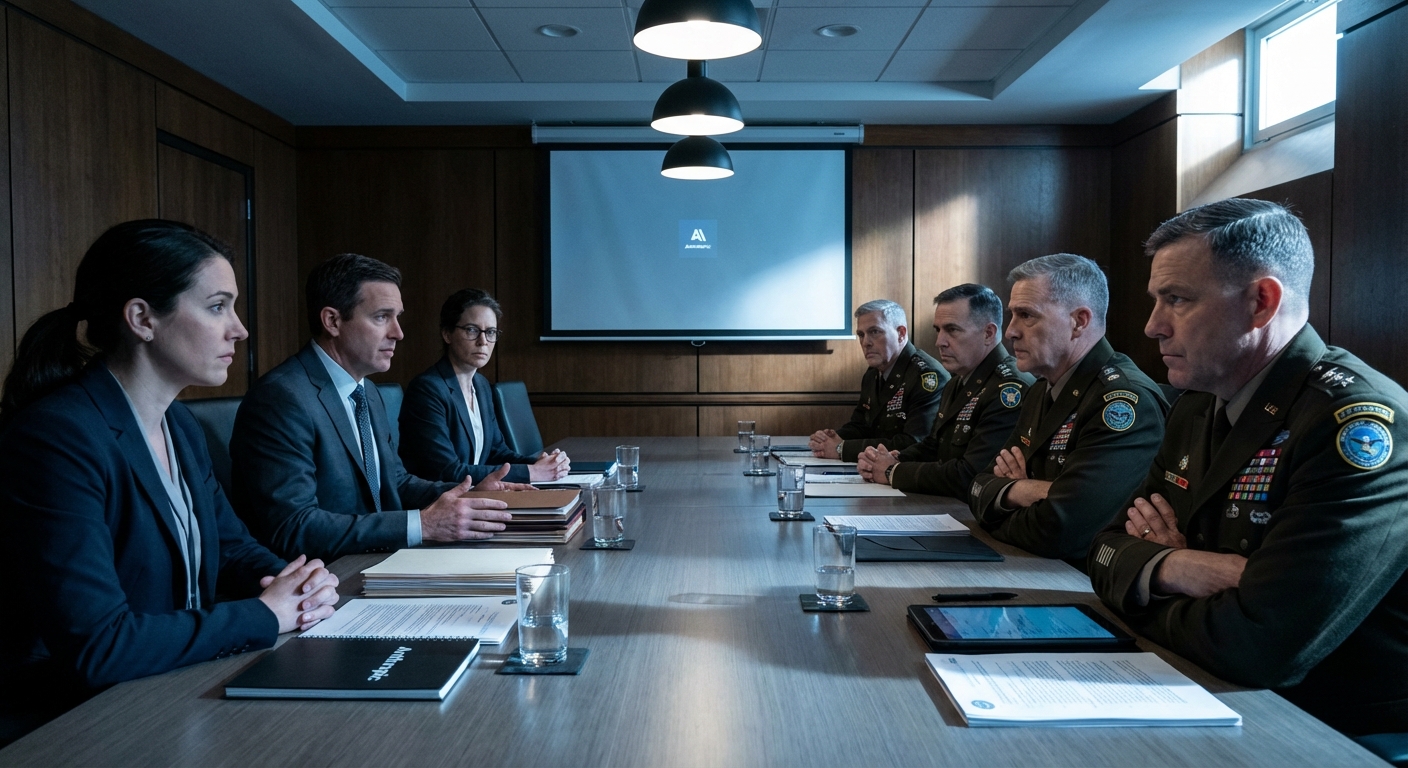
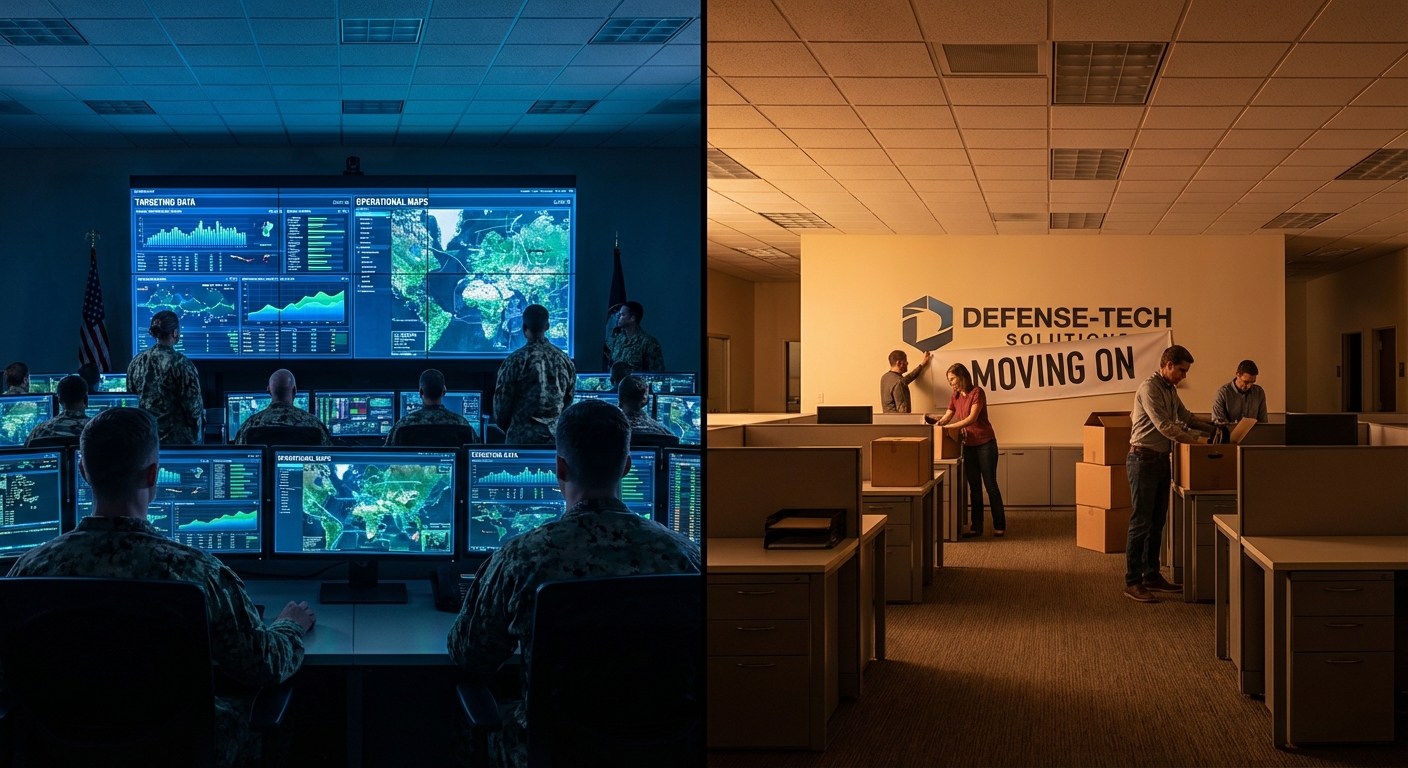
Defense Secretary Pete Hegseth has formally designated Anthropic a supply-chain risk, effectively banning the company from federal contracts after it refused to remove safety restrictions on military applications of Claude. Anthropic says it will challenge the designation in court, setting up what could become a defining legal battle over whether the government can compel AI companies to strip their own guardrails as a condition of doing business with the state.
This is the first time a major AI lab has been formally excluded from federal procurement on these grounds. The precedent matters beyond Anthropic: any AI company maintaining hard limits on how its models can be used in defense contexts now has a clearer picture of what non-compliance costs. Watch whether the court challenge proceeds on First Amendment grounds, contract law, or administrative procedure — the legal theory Anthropic chooses will shape how the industry defends itself going forward. We covered the early signals of this standoff in yesterday’s issue.
OpenAI Announces Pentagon Deal With Technical Safeguards — and Publicly Defends Anthropic

Sam Altman announced that OpenAI has reached an agreement with the Department of War to deploy its models on classified military networks. The deal includes prohibitions on domestic mass surveillance and autonomous weapons use without human oversight, cloud-only deployment, cleared OpenAI personnel embedded in operations, and contractual protections that OpenAI says exceed any previous classified AI deployment agreement, including Anthropic’s. Altman also called publicly for the Department of War to offer the same terms to all AI companies.
The most significant detail is not the contract itself but OpenAI’s explicit statement that it does not believe Anthropic should be designated a supply-chain risk, and that it has said so directly to the Pentagon. Two companies that compete fiercely for the same users and the same talent are now, at least publicly, aligned against the government’s approach. Whether that alignment holds under commercial pressure — or whether OpenAI’s deal becomes a template that other labs are effectively coerced into accepting — is the question to track across the next several weeks.
Claude Climbs to No. 2 on the App Store as Controversy Drives Consumer Attention
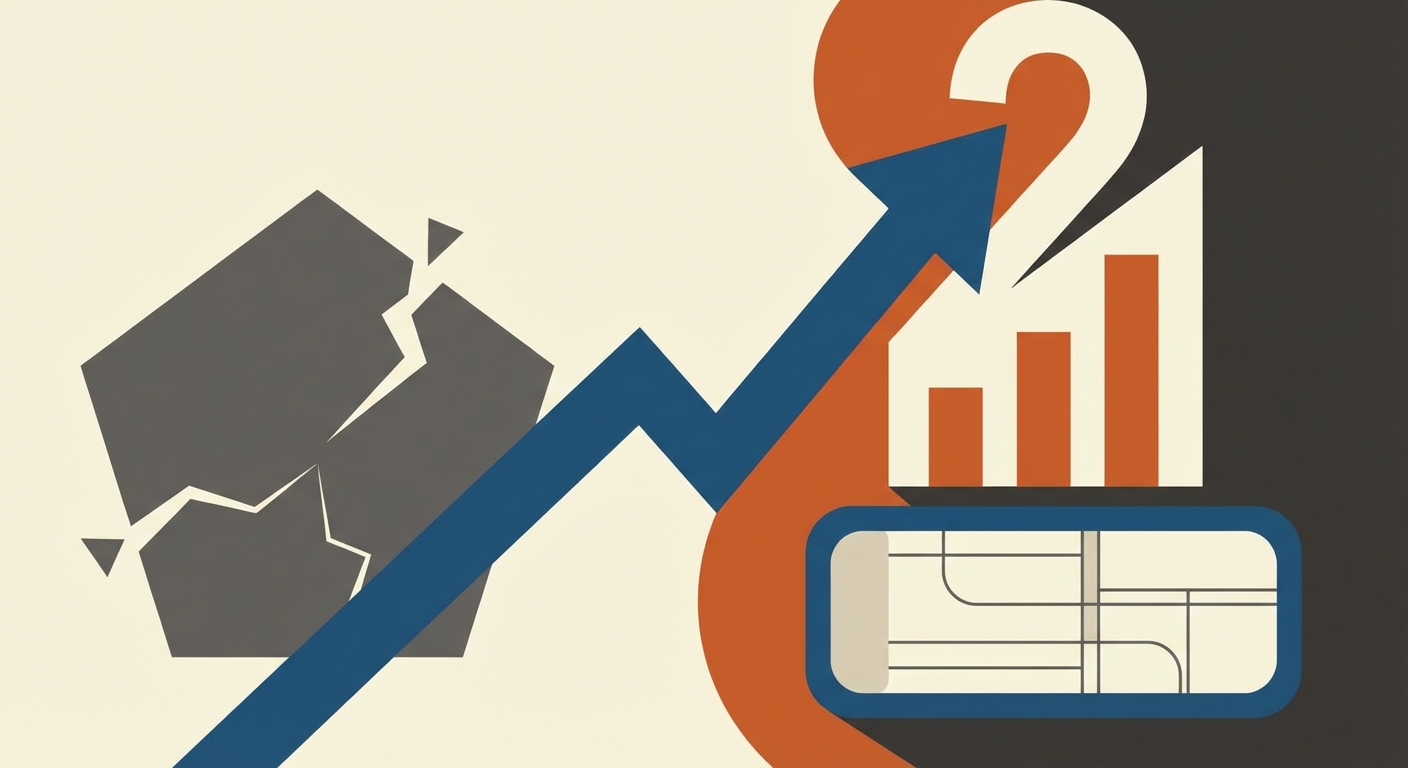
Anthropic’s Claude app reached the No. 2 position on the App Store in the days following the Pentagon dispute, driven by public attention to the company’s stand against unrestricted military use. The spike illustrates something worth noting: corporate positioning on contested political questions now moves consumer behavior at a speed and scale that traditional brand marketing cannot replicate.
The harder question is retention. App Store chart positions driven by controversy tend to decay quickly unless the new users find genuine utility. Anthropic’s near-term challenge is converting political sympathy into product habit. If even a fraction of that attention converts to paying subscribers, the Pentagon’s pressure may have inadvertently strengthened Anthropic’s consumer revenue line at the same moment it threatened the company’s government revenue.
The Infrastructure Buildout Underneath the AI Race
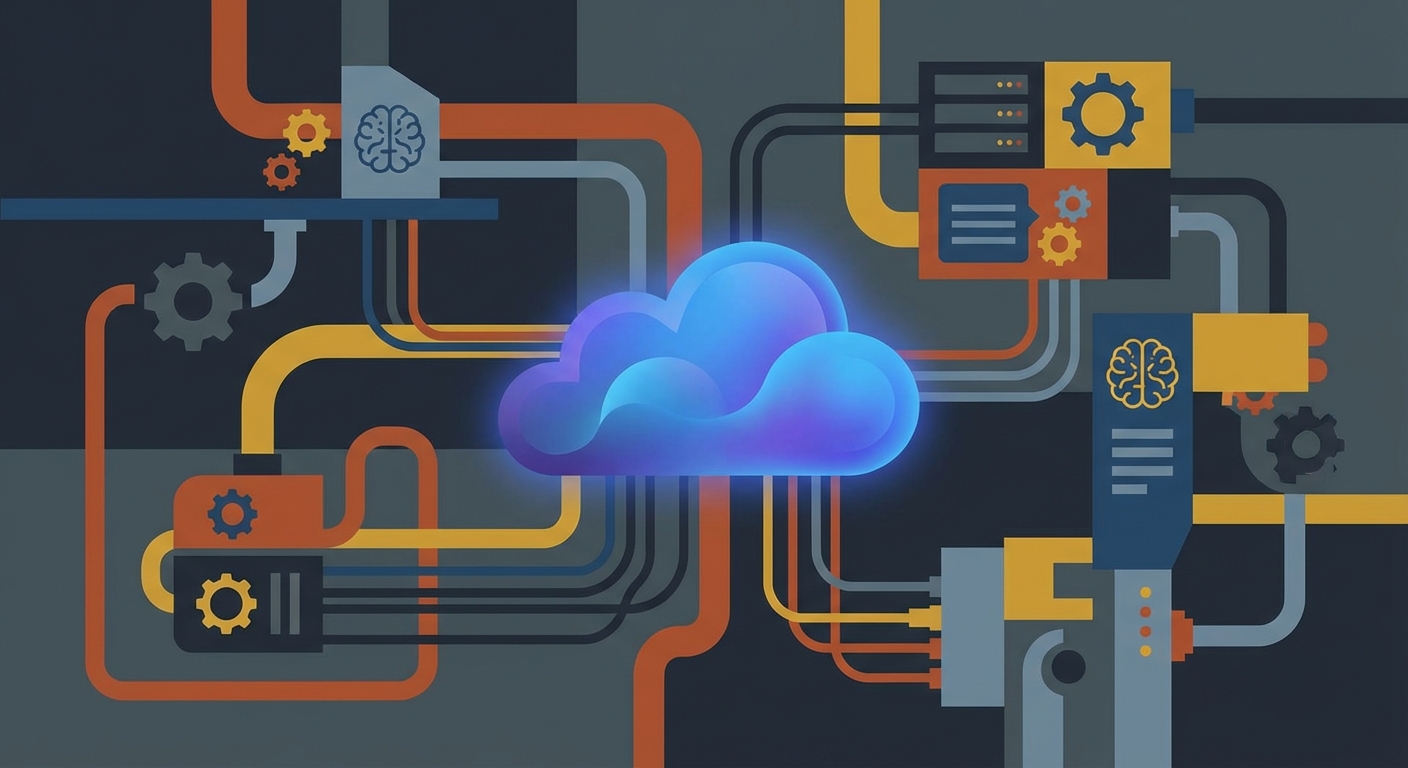
Meta, Oracle, Microsoft, Google, and OpenAI are each committing to data center expansions measured in the billions of dollars, making physical compute capacity the central strategic asset in AI competition. The throughline across these deals is that algorithmic progress and model capability are increasingly constrained not by research breakthroughs but by available power and cooling infrastructure.
The strategic implication runs deeper than raw compute: companies that lock in long-term power agreements and data center capacity now are building a structural moat that will be difficult to close in two to three years. Startups and mid-tier labs that cannot match this capital deployment face a narrowing window in which frontier model training remains accessible to them.
OpenAI Fires Employee for Insider Trading on Prediction Markets
OpenAI terminated an employee who placed bets on Polymarket and Kalshi using non-public information about company developments. The incident is notable less for the individual misconduct than for what it exposes: as prediction markets mature and AI companies become subjects of heavy speculative activity, the gap between internal information and public knowledge creates material financial temptation that most AI labs have not built compliance infrastructure to address.
Regulators have not yet established clear jurisdiction over prediction market insider trading, which creates uncertainty for both companies and employees. OpenAI’s response — termination without apparent regulatory referral — suggests the company is treating this as an HR matter rather than a legal one, at least publicly. Other labs should expect this to become a governance issue that requires explicit policy before it becomes a headline.
Analysis
What the Anthropic Ban Signals About AI Policy Under Trump (4 min read)
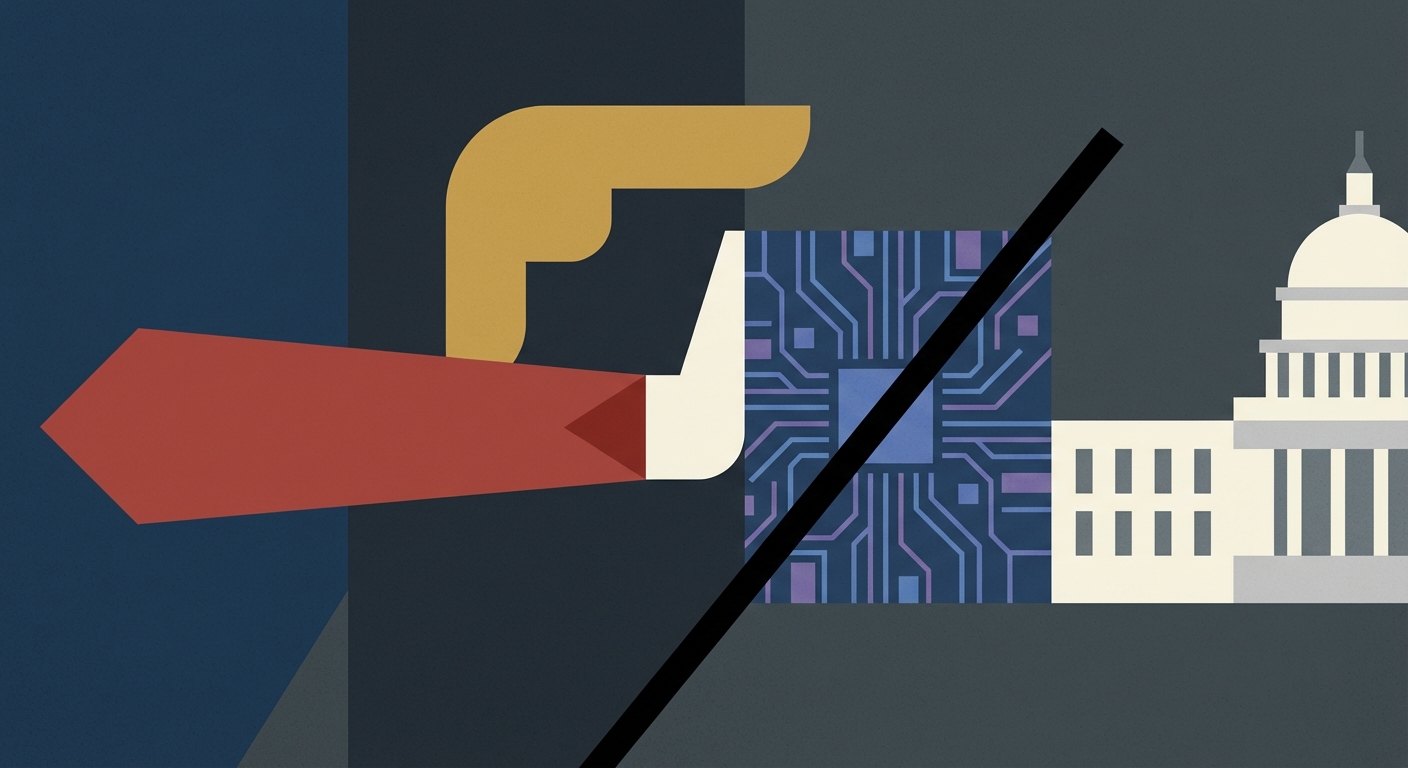
Ars Technica’s analysis frames the Anthropic exclusion as evidence that the administration is willing to use federal procurement power as a lever to reshape how AI companies configure their products. The piece traces the sequence from initial pressure to the formal supply-chain designation, making clear this was not an improvised response but a deliberate escalation with each step building on the last.
The deeper concern for the industry is the mechanism being used. Supply-chain risk designations were designed for adversarial foreign vendors, not domestic AI companies with disputed safety policies. Deploying that designation against an American company over an internal product disagreement is a significant stretch of the underlying regulatory authority — and one that Anthropic’s legal challenge will have to address directly. The outcome of that challenge could constrain or expand the government’s ability to use the same lever against other labs.
The Process Problem: Ethan Mollick on Opacity in Government-AI Relations (2 min read)

Wharton professor Ethan Mollick writes that regardless of the substantive merits of any particular agreement or refusal, the pattern of sudden escalations and opaque decision-making between government and AI companies is itself a serious problem. He argues that the decisions ahead — about autonomous weapons, classified deployments, and acceptable use — are too consequential to be navigated through the kind of public confrontation the past 48 hours have demonstrated.
This is worth holding onto as context for the deal-making now unfolding. OpenAI’s agreement with the Department of War was announced publicly within hours of Anthropic’s formal exclusion. The speed and the public framing suggest both sides are treating the news cycle as a negotiating venue. That may be tactically useful but it produces a poor record of reasoned deliberation about genuinely high-stakes policy choices.
From the Field
Andrej Karpathy on Why Multi-Agent Research Orgs Fail Right Now
Karpathy ran extended experiments using eight AI agents — a mix of Claude and Codex instances — organized into simulated research teams working on nanochat pretraining optimization. The results were instructive in a specific way: agents are competent executors of well-defined tasks but poor generators of research ideas. One agent “discovered” that increasing hidden layer size improves validation loss without accounting for the fact that a larger network also trains longer — a basic confound that required human intervention to identify.
His framing is the part worth sitting with: building a multi-agent system means programming an organization, where the prompts, tools, processes, and workflows are the source code. A daily standup is not a management ritual, it is a function call in the org’s runtime. That reframe has practical consequences for anyone building agent pipelines: the bottleneck is not model capability but organizational design, and the debugging happens at the process level, not the model level.
Practitioners Are Cutting MCP Output Tokens by 98% to Preserve Context in Claude Code
Developers working with Model Context Protocol in Claude Code are reporting that default MCP server output is verbose enough to consume most of a working context window in complex sessions, leaving insufficient room for iterative reasoning. A circulating post on Hacker News describes a compression approach that reduced MCP output by 98% without meaningful loss of task-relevant information, by stripping metadata, collapsing repetitive structures, and returning only fields the model actually uses.
For teams building production agent workflows on top of Claude Code, this is an immediately applicable optimization. Context window management is not a theoretical concern — it is a real constraint that shapes what agents can accomplish in a single session, and the gap between default configurations and optimized ones is large enough to matter for complex, multi-step tasks.
Voices
@sama posted the terms of OpenAI’s Department of War agreement directly, including the explicit prohibition on autonomous weapons and domestic surveillance: “The world is a complicated, messy, and sometimes dangerous place.” The public disclosure of contract terms — unusual for a classified deployment agreement — reads as a deliberate move to set a visible baseline that other companies and the government would have difficulty publicly arguing against.
@OpenAI stated plainly: “We do not think Anthropic should be designated as a supply chain risk and we’ve made our position on this clear to the Department of War.” A company that just signed a defense deal publicly defending its primary competitor against the client that just signed the deal is not a routine industry statement. It is either a calculated positioning move, a genuine principle, or both — and the distinction will become clearer depending on what OpenAI does if its own safety terms are ever challenged.
@emollick noted that he has no inside information about the Anthropic-OpenAI-government sequence but that “what we saw publicly — sudden escalations, lack of transparency, lack of clarity — was a bad pattern for navigating the decisions ahead.” The observation is disciplined precisely because it avoids taking sides on the substance: the process itself is the warning sign, independent of who was right.
Business Intelligence
Small Business
The Anthropic exclusion from federal contracts is unlikely to affect small businesses directly, but it carries an indirect implication worth noting: if the administration continues using procurement pressure to shape AI product configurations, the tools available in the market may drift toward fewer safety restrictions over time. For a small business using AI for customer-facing applications — drafting communications, screening inquiries, generating content — that shift may be invisible until something goes wrong publicly and the blame lands on the tool the business chose.
The more immediate opportunity is the one Anthropic’s App Store spike illustrates. Consumer attention to AI is genuinely high right now, driven by political controversy that has nothing to do with product quality. Small businesses that have been slow to adopt AI tools are encountering customers and employees who are newly curious about them. That is a low-friction moment to introduce AI-assisted workflows internally — the social permission cost is lower than it was six months ago.
On infrastructure: the multi-billion dollar data center buildouts underway at every major provider mean that cloud AI capacity constraints, which caused reliability and latency problems for small users over the past two years, are likely to ease through 2026 and 2027. Small businesses that deferred AI adoption partly because of unreliable API performance have more reason to revisit that decision now.
Mid-Market
The OpenAI-Pentagon agreement introduces a vendor dynamic that scaling companies with any federal exposure need to think through carefully. OpenAI has now established a formal relationship with classified military networks, which creates both opportunity and complexity. If your company operates in a regulated sector with government clients, your AI vendor’s relationship with federal agencies is now a due diligence question, not just a capability question. Ask your vendors directly what their classified deployment agreements say about data handling and model behavior — the answers will vary significantly.
The Karpathy multi-agent findings are relevant at this scale. Many mid-market companies are beginning to evaluate or deploy agent pipelines for knowledge work — research, analysis, code generation, content production. The honest takeaway from his experiments is that agents are not yet reliable autonomous researchers, but they are reliable executors of well-specified tasks. The practical implication: invest in prompt and process design before expanding agent headcount. The organizational design is the bottleneck, not the model.
The insider trading incident at OpenAI is a preview of a governance problem that will arrive at mid-market companies as AI becomes embedded in operations. Employees with access to proprietary data — customer behavior, financial projections, product roadmaps — combined with access to prediction markets or derivative instruments, create a compliance surface that most companies have not mapped. Now is the right time to extend your existing insider trading and confidentiality policies explicitly to cover AI-related information and prediction market activity.
Enterprise
The formal supply-chain risk designation of Anthropic is the kind of regulatory action that should trigger an immediate vendor risk review across every enterprise that has Anthropic in its AI stack. Not because the designation is likely to disrupt commercial API access in the near term — Anthropic is contesting it in court — but because the designation process itself reveals that the regulatory environment for AI vendors is now materially less stable than it was 90 days ago. Any enterprise that has not stress-tested its AI vendor concentration should do so now, with particular attention to what happens to workflows and products if a vendor becomes inaccessible on 30 days’ notice.
OpenAI’s classified deployment agreement raises a governance question that enterprise CTOs will be asked about at the board level: if OpenAI is operating models on classified military networks with cleared personnel embedded in deployments, what does that mean for the data your organization sends through OpenAI’s commercial APIs? The answer is almost certainly “nothing direct,” but the question will be asked, and the answer requires understanding OpenAI’s technical architecture well enough to explain it clearly. Prepare that briefing before the question arrives from your general counsel or board.
The infrastructure buildout story has a procurement implication that is easy to miss. Microsoft, Google, Oracle, and others are locking in long-term power and facility agreements at scale now. That capital deployment will flow through to enterprise pricing structures — likely keeping costs lower for large-volume customers who commit to multi-year agreements — but it also creates leverage for the hyperscalers in renewal negotiations. Any enterprise AI contract coming up for renewal in the next 12 months should be evaluated against the assumption that the vendor has more pricing power than they did at the last renewal, not less.
In Brief
- Anthropic publishes formal statement on Hegseth’s supply-chain designation. The company confirms it will challenge the designation legally and outlines its position on safety restrictions in defense applications.
- OpenAI distinguishes its safety approach from competitors in defense deployments. The company argues that usage policies alone are insufficient and that technical controls, cleared personnel, and cloud-only deployment are the meaningful differentiators.
- Claude’s App Store rank jumped to No. 2 following the Pentagon controversy. The surge illustrates how politically charged corporate decisions now function as consumer marketing, whether intended or not.
- OpenAI terminated an employee for placing prediction market bets using non-public company information. No regulatory referral has been publicly reported, and the legal question of jurisdiction over prediction market insider trading remains unresolved.
- Hyperscalers are committing billions to data center expansion in parallel with their AI model investments. Physical compute capacity is now the primary constraint on frontier model training, not algorithmic research.
- Karpathy’s multi-agent research experiments show agents are strong executors but weak hypothesis generators. The finding has direct implications for teams deploying agent pipelines expecting autonomous research or analysis output.
Tool of the Day
Context compression for MCP in Claude Code is a prompt and configuration approach — not a standalone product — that developers are using to reduce Model Context Protocol output verbosity by stripping non-essential metadata and collapsing repetitive structures before they consume context window space. It is relevant for any engineering team running Claude Code in complex, multi-step agent workflows where context exhaustion is cutting sessions short. A concrete use case: a developer building a code review agent that calls multiple MCP tools in sequence can apply this approach to keep the full reasoning chain within a single context window rather than splitting across sessions and losing coherence. The technique requires no additional tooling, only deliberate configuration of what MCP servers return.