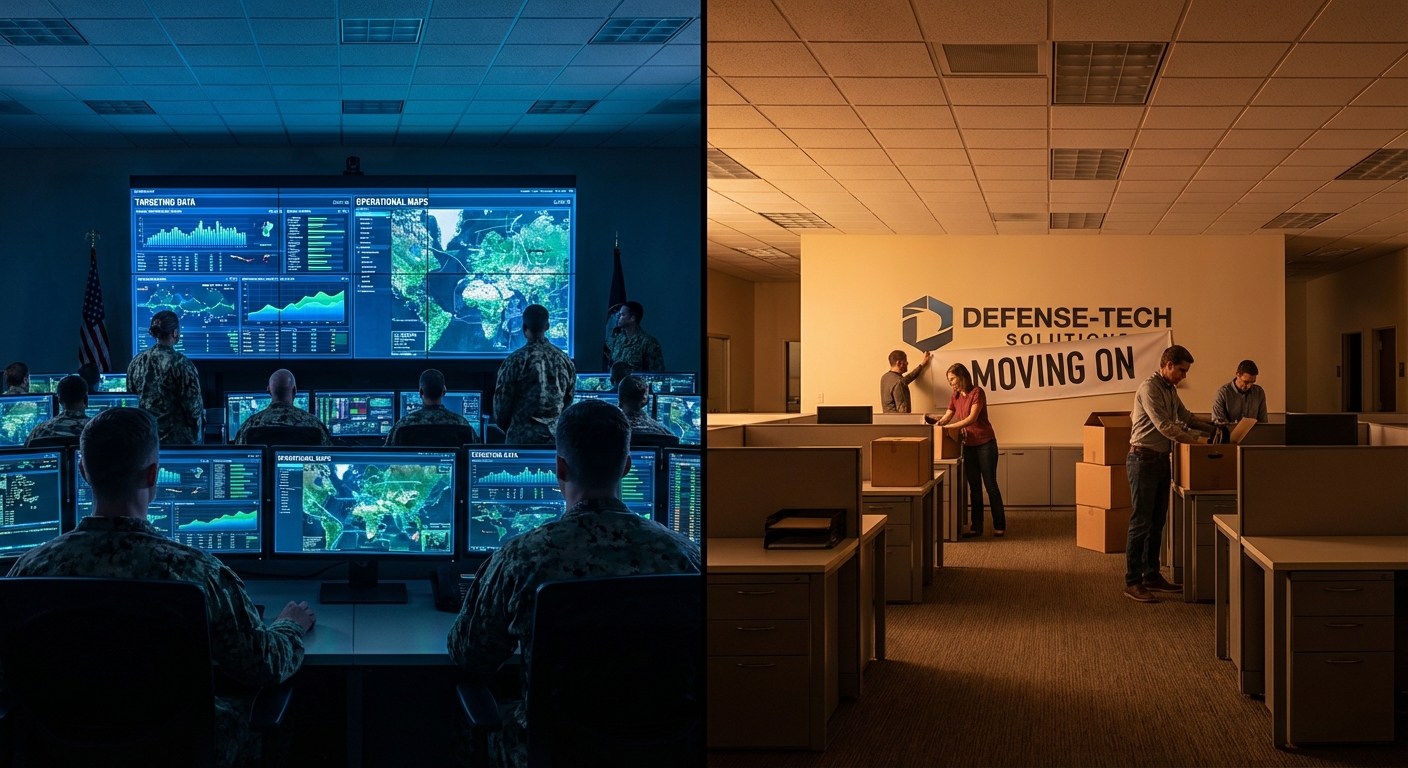

How OpenAI Caved to the Pentagon on AI Surveillance
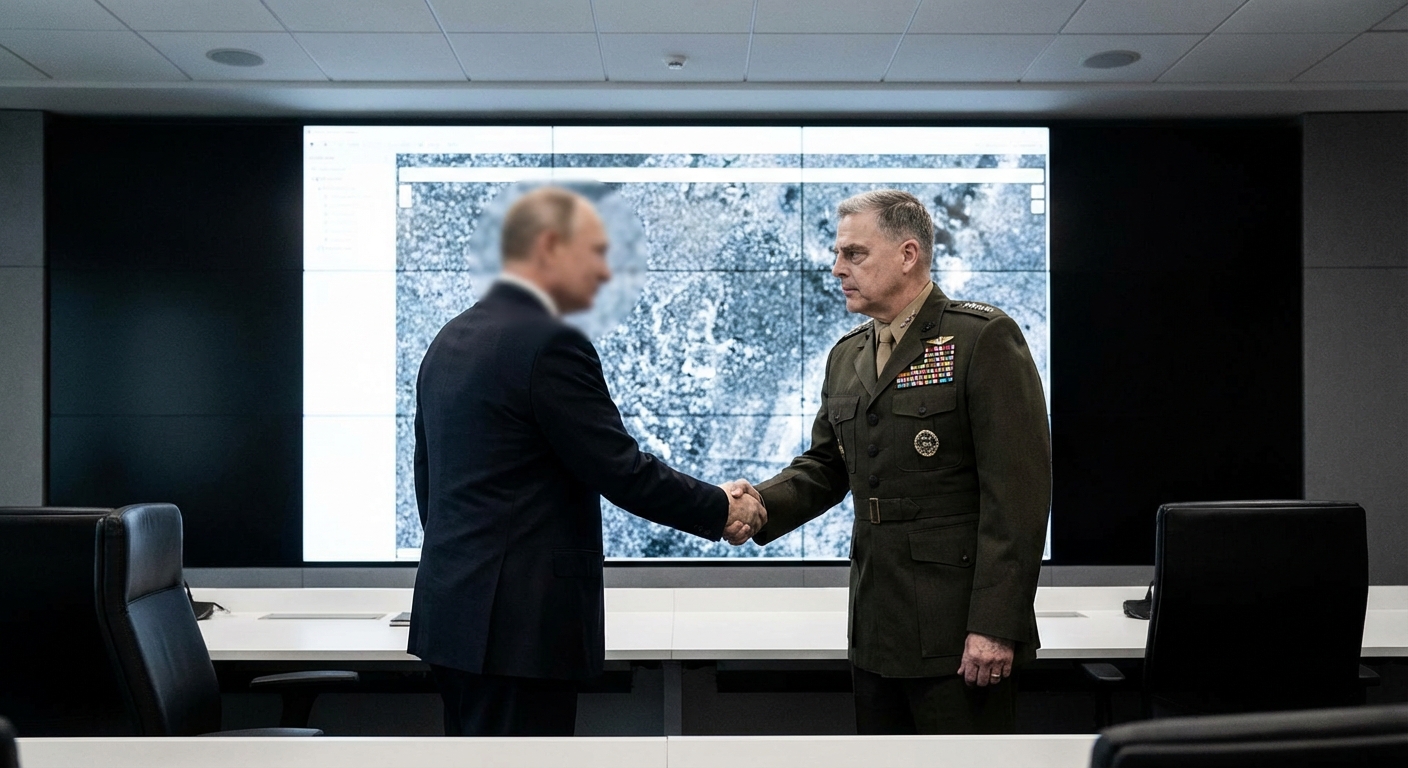
OpenAI has agreed to allow the Pentagon to use its models in military surveillance applications, a deal the company’s own negotiators described as “rushed” and one that began only after the Defense Department publicly flagged Anthropic as a supply-chain risk for refusing similar terms. The sequence of events is revealing: the DOD used its procurement power as a lever, and OpenAI moved. Anthropic held, and paid a reputational and commercial price for it.
This is now the defining fault line in the AI industry’s relationship with the federal government. Every major lab will face a version of this negotiation, and OpenAI’s capitulation sets the floor for what the Pentagon considers an acceptable starting position. Watch whether other frontier labs treat OpenAI’s deal as a template or as a warning.
Tech Workers Urge DOD and Congress to Withdraw Anthropic Supply-Chain Risk Label
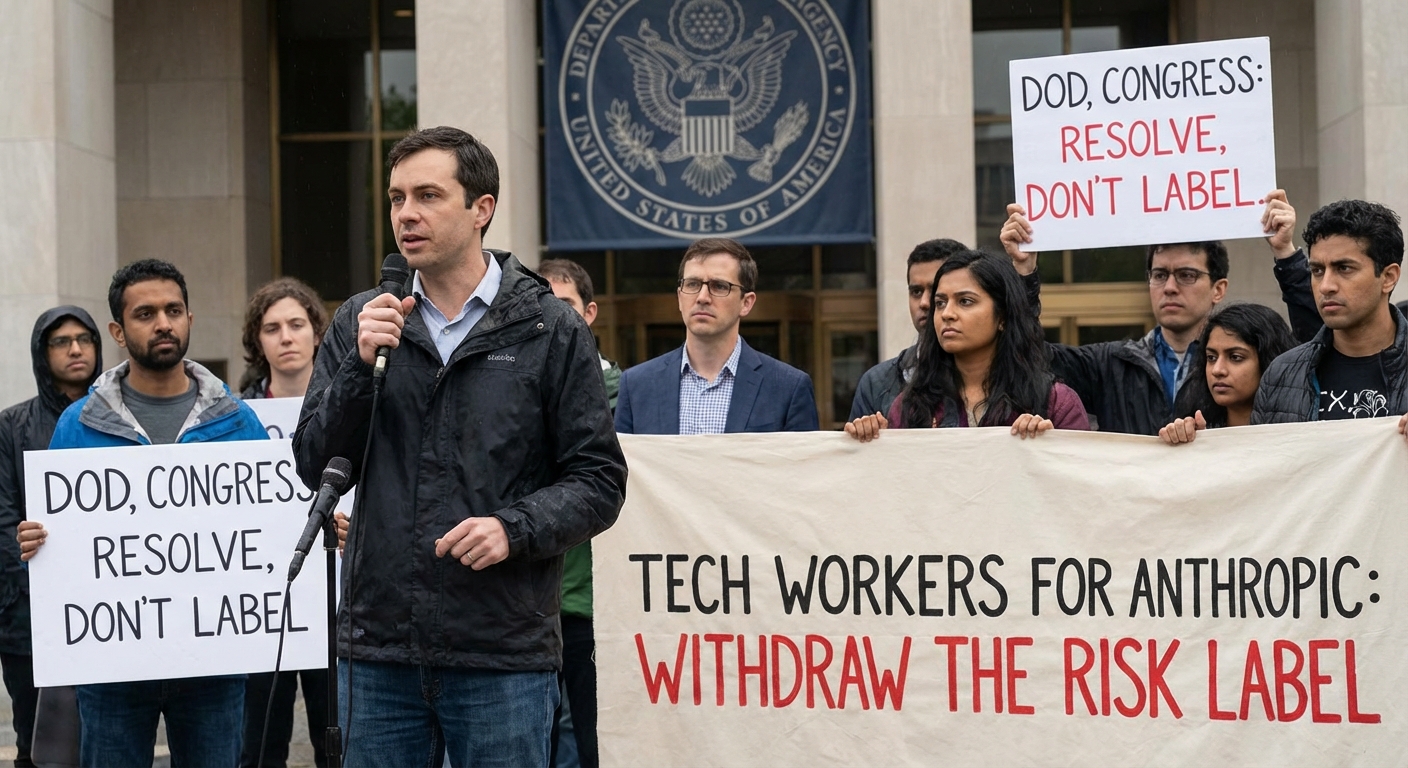
An open letter signed by tech workers is calling on the Defense Department and Congress to drop the supply-chain risk designation against Anthropic and resolve the dispute through private channels. The letter reflects an industry-wide unease about the precedent: if the DOD can effectively blacklist an AI company by labeling it a national security risk, it gains extraordinary leverage over the entire sector’s commercial decisions.
For Anthropic, the stakes are immediate. The designation threatens its ability to work with any federal agency, not just the Pentagon, which would cut off a fast-growing revenue channel at a moment when the company is competing directly with OpenAI and Google for enterprise contracts. Read yesterday’s issue for background on the broader defense AI contracting picture at the-ai-inference.com.
AI-Generated Art Cannot Be Copyrighted After Supreme Court Declines to Review the Rule
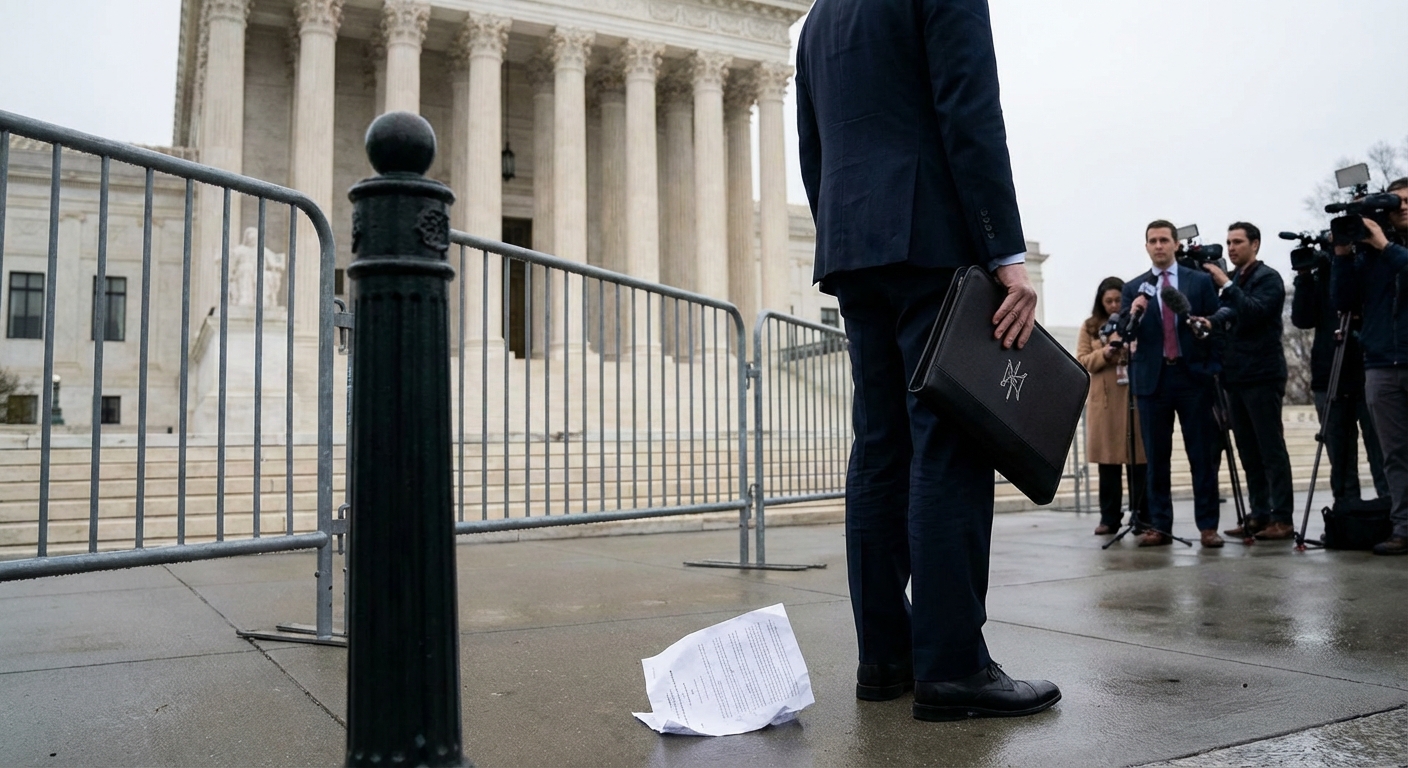
The US Supreme Court has declined to hear Stephen Thaler’s appeal seeking copyright protection for images created entirely by his AI system, leaving intact the lower court ruling that copyright requires a human author. The decision is not an active ruling by the court, but by refusing to take the case, the justices have let the existing standard stand, and it will now govern how companies, artists, and platforms treat AI-generated output until Congress acts or a different case reaches the court.
The practical implication is significant: any image, text, or other content produced by an AI system without meaningful human creative input is, under current US law, in the public domain the moment it is generated. Businesses building products on top of generative AI need to audit which of their outputs may be unprotectable and adjust their IP strategies accordingly.
Nvidia Is Spending $4 Billion on Photonics to Stay Ahead in AI Infrastructure
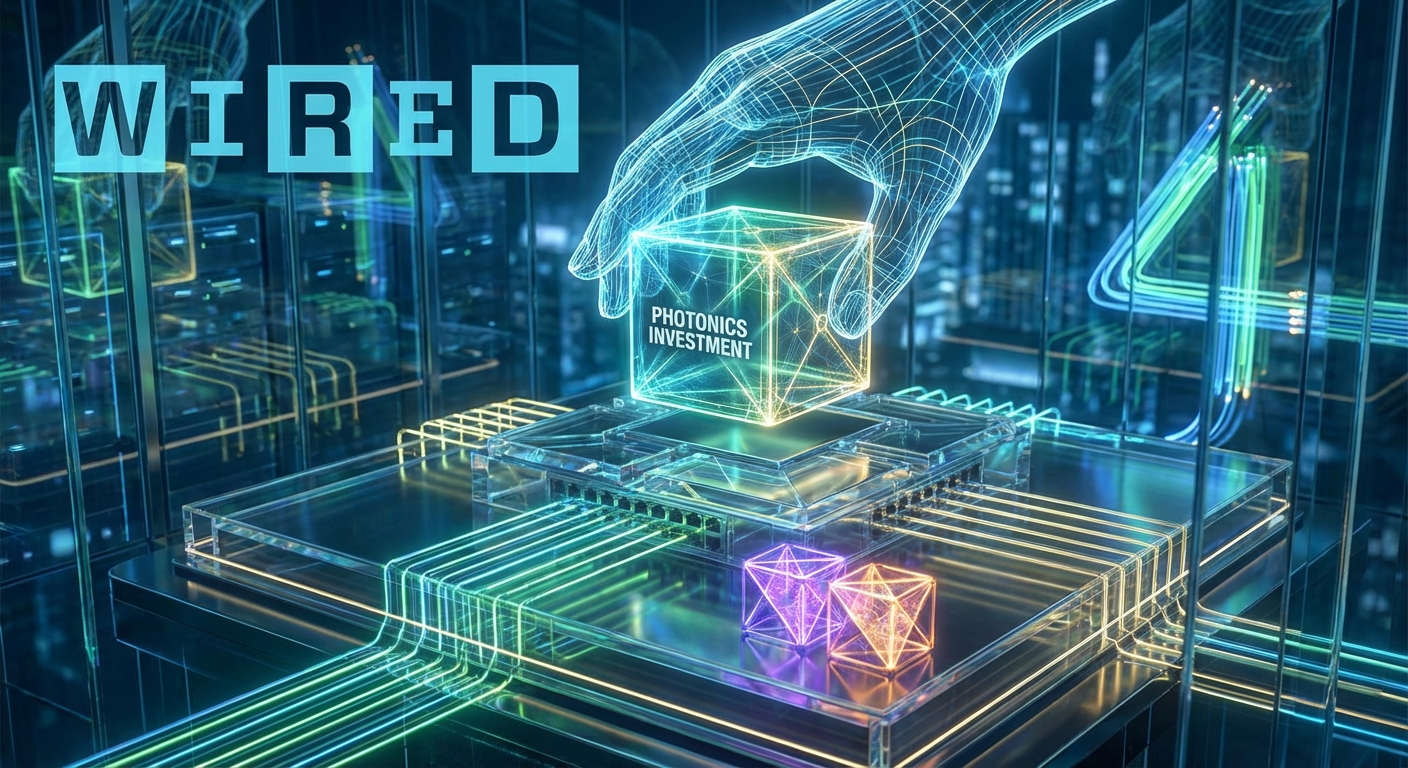
Nvidia is committing $2 billion each to photonics companies Lumentum and Coherent, targeting the optical interconnects and circuit switches that move data between GPUs inside AI data centers. The investment acknowledges something the chip roadmap alone cannot solve: as models grow larger and clusters grow denser, the bandwidth and energy cost of moving data between processors becomes the binding constraint on performance.
This is infrastructure spending with a long time horizon, and it signals that Nvidia is not content to let its networking rival Infiniband remain the only answer. Optical interconnects promise lower latency and dramatically better energy efficiency per bit, which at gigawatt-scale data center buildouts translates into operating cost differences that will shape which cloud providers can afford to train the next generation of frontier models.
Apple Might Use Google Servers to Store Data for Its Upgraded AI Siri

Apple is in discussions with Google to use Google’s cloud infrastructure for storing data processed by the upgraded, Gemini-integrated version of Siri. The arrangement would be unusual on its face, given the two companies’ rivalry, but it reflects a pattern Apple has long maintained: outsource commodity infrastructure while retaining control of the user-facing experience and the privacy narrative.
The privacy question is the one worth watching. Apple has built its brand partly on the claim that your data stays on your device or in Apple’s own infrastructure. Routing Siri data through Google servers, even under contractual privacy protections, complicates that story and may draw scrutiny from European regulators who have already been examining the Apple-Google search revenue arrangement.
Analysis
OpenAI’s “Compromise” with the Pentagon Is What Anthropic Feared (4 min read)

MIT Technology Review reconstructs the timeline of the Pentagon negotiations and finds that OpenAI’s deal began under direct pressure, not proactive engagement. The framing of the arrangement as a “compromise” obscures what actually happened: a government agency with procurement authority publicly stigmatized a company for refusing, then watched a competitor agree to terms that had previously been off the table for both.
The piece is worth reading in full because it names the specific applications now permitted, including classified surveillance, and traces how OpenAI’s own usage policies were rewritten to accommodate the deal. That internal policy change matters as much as the contract itself, because it sets the precedent for what OpenAI’s models can now be used for across all government customers, not just the Pentagon.
A Case for Go as the Best Language for AI Agents (5 min read)
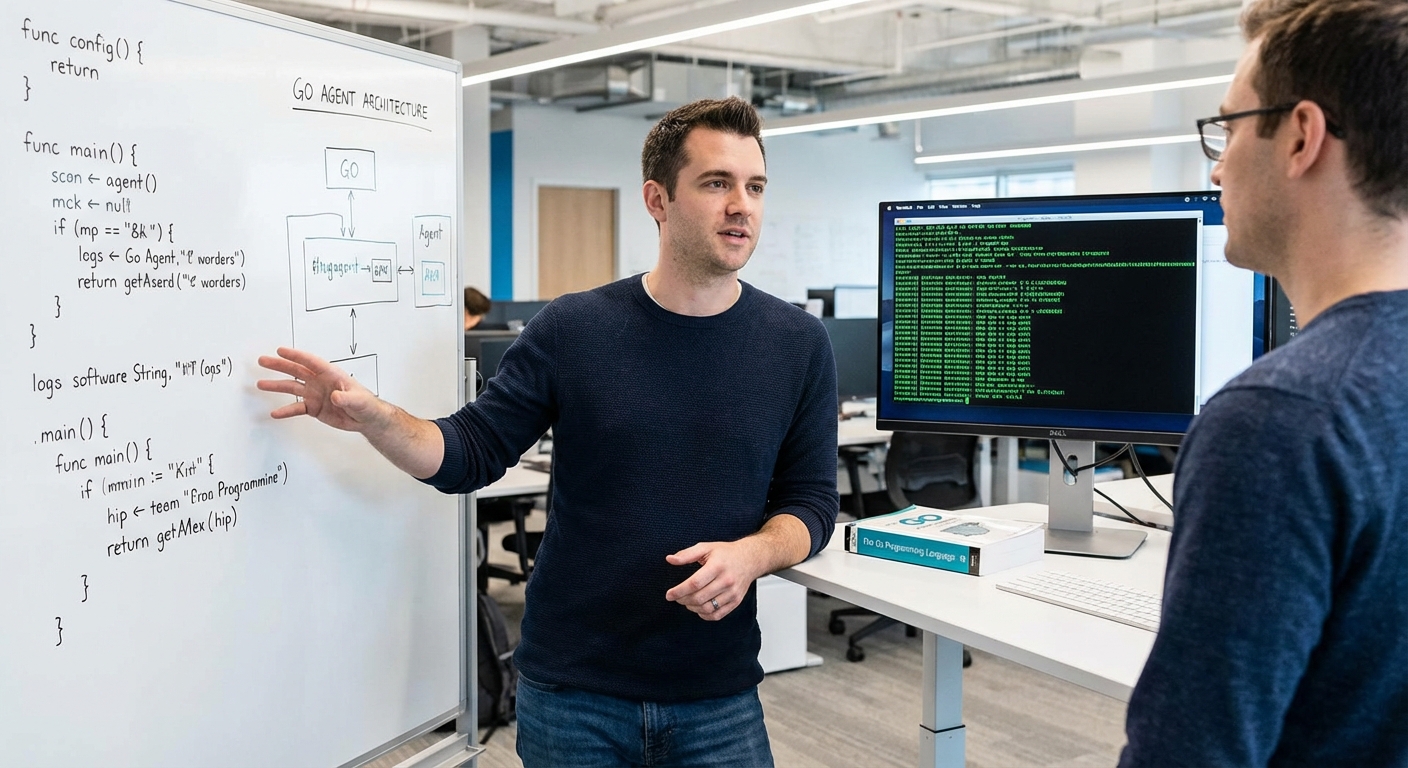
As AI agents move from demos into production systems handling real workloads, the engineering choices underneath them start to matter in ways that the Python-dominated prototyping culture has not yet fully reckoned with. This post argues that Go’s native concurrency model, fast startup times, and low memory overhead make it substantially better suited to the operational demands of agent infrastructure than Python, which carries significant runtime costs when deployed at scale.
The argument is not academic. Agent pipelines frequently involve managing dozens of concurrent tool calls, handling timeouts gracefully, and running under memory constraints in containerized environments. The post is useful for any engineering team that built its agent stack in Python for speed of iteration and is now starting to feel the operational weight of that decision.
AI Adoption in Financial Services Has Hit a Point of No Return (2 min read)
Finastra’s survey of 1,509 senior financial services executives finds that just 2% of institutions globally report no AI use, a figure that effectively marks the end of the adoption debate in the sector. The more important question, which the survey begins to surface, is not whether financial institutions are using AI but what they are doing with it and how exposed they are to models they do not fully understand.
Financial services is a sector where model errors carry direct legal and financial liability, and the speed of adoption has outpaced the development of governance frameworks at most institutions. The 98% adoption figure is a headline; the quieter story is how many of those institutions are running AI in consequential decisions without audit trails, explainability requirements, or clear ownership when something goes wrong.
From the Field
Show HN: I Built a Sub-500ms Latency Voice Agent from Scratch
A builder demonstrated a working voice agent achieving roughly 400ms end-to-end latency through a full speech-to-text, LLM, and text-to-speech pipeline, with functional barge-in handling. The key insight from the writeup is that voice interaction is fundamentally a turn-taking problem, and the hard part is not raw latency but detecting when a speaker has actually finished a thought, a problem that simple voice activity detection consistently fails on.
The Hacker News thread is worth scanning for the discussion on end-of-turn detection approaches. Several practitioners note that semantic end-of-turn detection, training a small model to predict when a human is genuinely done speaking rather than pausing mid-sentence, is where production voice agents live or die. This is the problem ElevenLabs, Hume, and others are all trying to solve, and seeing it built from scratch makes the tradeoffs concrete.
OpenClaw Surpasses React in GitHub Stars
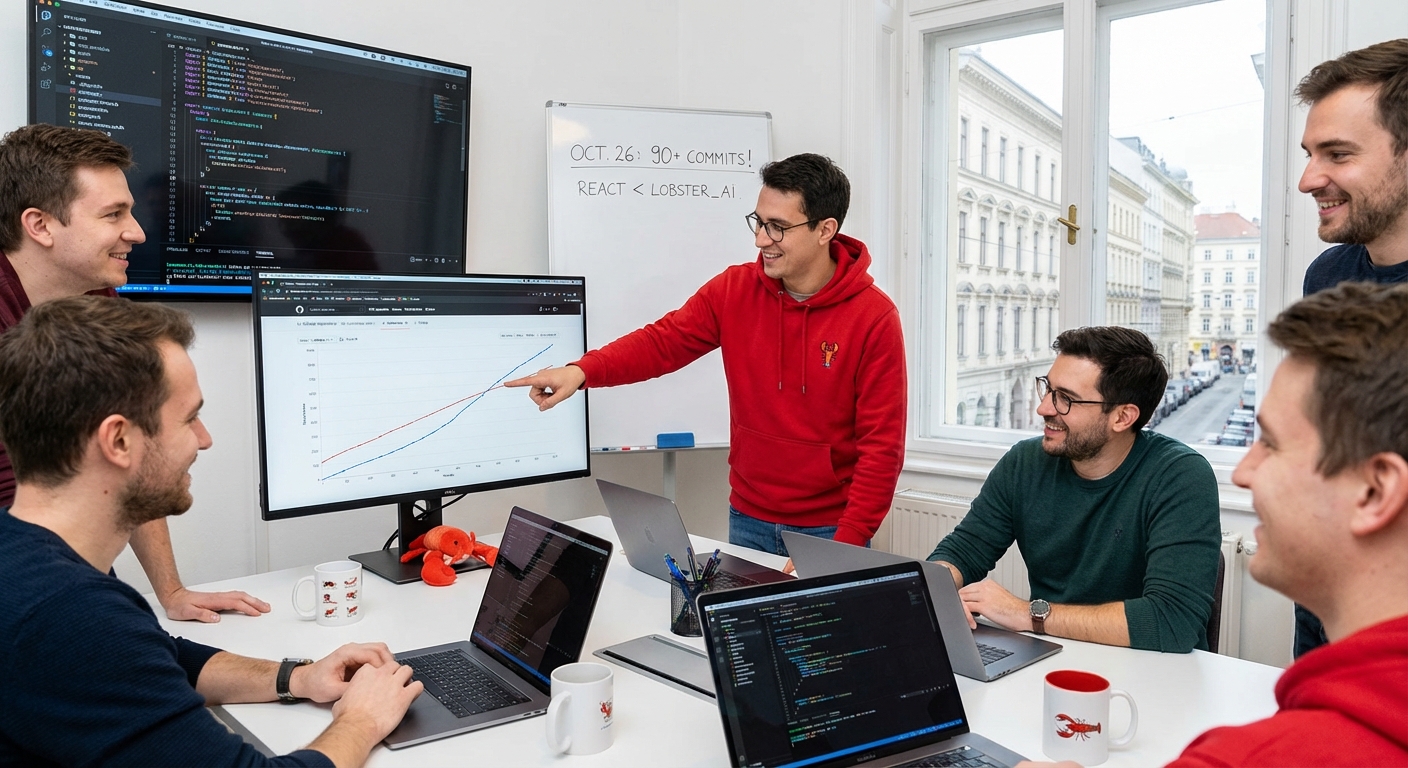
OpenClaw, a personal AI assistant built and promoted by Peter Steinberger (@steipete) and described by its community as a project that broke two major GitHub records while being software people actually install and run, has passed React in total GitHub stars. React powers a large portion of the modern web and has been accumulating stars for over a decade. OpenClaw has done it in a fraction of the time.
The star count is a crude metric, but the trajectory is a genuine signal about where developer attention is flowing. The tooling ecosystem around AI agents is attracting the kind of community energy that previously went into foundational frontend infrastructure. Whether the project sustains it depends on shipping, but the moment is a useful indicator of where early-career developers are orienting.
OpenClaw Calls a Developer Live at Laracon EU to Request a PR Merge
At Laracon EU, Taylor Otwell, creator of the Laravel framework, received a live phone call from OpenClaw AI during his talk. The call was the agent requesting that he merge a pull request it had reviewed. The moment was unscripted and worked, which is precisely what makes it worth attention: agentic systems making outbound calls to humans to complete a workflow is no longer a slide in a deck.
The implications for developer tooling are direct. If an agent can review code, identify the right human decision-maker, and initiate contact to close the loop, the traditional model of a developer sitting in a queue reviewing PRs becomes optional for a growing class of routine changes. The video timestamp in the source link captures the call as it happened.
Voices
@GoogleDeepMind posted a thread announcing “Nano Banana 2,” an upgrade to its image generation model featuring improved lighting, richer textures, sharper detail, multi-aspect-ratio output, upscaling from 521px to 2K and 4K, and the ability to render accurate, localizable text directly within generated images. The thread demonstrates all three capabilities with examples. The text-in-image capability in particular addresses one of the most persistent failure modes in AI image generation, where rendered text has historically been garbled and unusable for any professional application. Accurate in-image text with on-the-fly translation support opens the tool to marketing and localization workflows that would previously have required significant manual post-production.
@steipete highlighted that OpenClaw is “the first project to break both those records while being actual software that people install and run,” distinguishing it from prior GitHub star milestones driven by repositories that were primarily documentation or libraries. The emphasis on installed, running software matters because it suggests the star count reflects genuine user adoption rather than speculative interest, which makes the React comparison more substantive than it might initially appear.
@onusoz announced version 2026.3.1 of the Claude Code and Codex integration for Discord, noting that the first release was generating thousands of Discord messages per conversation due to uncoalesced tool call notifications. The update hides tool-call noise, batches messages at turn end, and adds stop controls. The post is a useful reminder that agentic systems running inside communication platforms create notification and usability problems that are entirely distinct from the underlying model quality, and that these integration layers need their own engineering effort to be production-ready.
Business Intelligence
Small Business
The Supreme Court’s effective confirmation that AI-generated content cannot be copyrighted has a direct and underappreciated implication for small businesses using generative tools to produce marketing assets, product images, or written content. If you are using an AI tool to generate images for your brand and a human creative director is not making substantive choices about the output, those images may not be protectable intellectual property. A competitor could legally copy them. Before you build a visual identity around AI-generated assets, make sure a human is making and documenting genuine creative decisions, which is what copyright law now requires to establish ownership.
The 14.ai story is relevant to any small business spending meaningfully on customer support. At a ten-person company, a single support hire often costs more than the entire software budget. AI systems that can handle tier-one support, answer product questions, and escalate only genuine edge cases are now a realistic operational choice rather than a future aspiration. The honest caveat is that AI support quality is measurable: track your deflection rate and your customer satisfaction scores separately, because a system that deflects tickets but generates frustration is worse than the problem it replaced.
Mid-Market
The OpenAI-Pentagon deal and the Anthropic supply-chain risk designation are not just policy stories. They are vendor risk events. If your company relies on Anthropic’s Claude for any production workflow, the possibility that the DOD designation limits Anthropic’s commercial operations or forces a restructuring of its contracts with cloud providers is a risk that belongs in your vendor assessment. This is not an argument to switch providers. It is an argument to have a contingency and to understand which of your workflows are exposed to single-vendor dependency on frontier AI.
The financial services adoption data, where 98% of institutions globally report active AI use, has a direct read-across for mid-market companies in any sector. Your competitors are not experimenting with AI anymore; they are running it in production. The differentiator is no longer adoption but quality of implementation and governance. Companies that have deployed AI without audit trails, clear ownership of model outputs, or documented processes for handling errors are accumulating liability quietly. The moment something goes wrong at scale, the question will be whether you can show what the system was doing and who was responsible for it.
Enterprise
The copyright ruling deserves board-level attention, not because it changes what your teams are building today but because it changes the IP assumptions baked into those projects. Enterprise legal and IP teams need to audit AI-assisted workflows and establish clear documentation standards for human creative contribution at every stage where intellectual property is expected to result. This is also a procurement question: vendors selling AI-assisted creative, marketing, or content tools that imply you will own the output may need to revisit their contractual representations in light of the ruling.
Nvidia’s $4 billion photonics investment is a signal worth taking seriously in infrastructure planning conversations. The company is making a generational bet that optical interconnects will replace electrical ones inside AI data centers, and its choice of suppliers indicates which photonics vendors are likely to have Nvidia’s roadmap visibility. For enterprises making long-term commitments to cloud AI infrastructure, understanding which providers are moving toward photonic interconnects and on what timeline will matter for the economics of large-scale model training and inference over a three-to-five year horizon.
The Apple-Google Siri data storage arrangement, if confirmed, raises a governance question that CIOs at enterprises with significant Apple device fleets will need to answer for their boards: if employee Siri queries are processed using Google infrastructure, what are the data residency, privacy, and confidentiality implications for sensitive internal queries made on corporate devices? Apple’s enterprise data agreements may not have anticipated this architecture. A review of mobile device management policies and acceptable use guidelines for AI voice assistants on corporate hardware is warranted before this arrangement is finalized and switched on by default.
In Brief
- Anthropic’s Claude Suffers Widespread Outage. Claude went down Monday morning affecting thousands of enterprise users, a reminder that AI services now sit on the critical path of business operations with the reliability exposure that implies.
- AMD Ryzen AI 400 Chips Bring NPUs to AM5 Desktop Platform. AMD is launching its Ryzen AI 400 series for AM5 desktops with integrated neural processing units, targeting business PCs first before consumer availability is confirmed.
- SK Telecom Announces Full AI Restructuring at MWC 2026. The South Korean carrier is scaling data centers to gigawatt capacity and rebuilding its network, customer service, and internal systems around AI, positioning itself as AI infrastructure rather than a traditional telco.
- 14.ai Is Replacing Customer Support Teams at Startups. The startup, founded by a married couple, is deploying AI to eliminate tier-one support roles at early-stage companies and launched a consumer brand to benchmark how much work AI can realistically absorb.
- Google DeepMind Image Tool Adds Multi-Aspect Ratio Output and 4K Upscaling. The updated Nano Banana 2 model supports a range of aspect ratios and upscaling from 521px to 2K and 4K, addressing a persistent gap between AI image generation and professional design production requirements.
Tool of the Day
This open-source voice agent implementation is built for developers who need to understand the full STT-to-LLM-to-TTS pipeline before committing to a vendor abstraction layer. It achieves roughly 400ms end-to-end latency and includes working barge-in handling, which is the capability that lets a user interrupt the agent mid-response and have the system cancel immediately rather than talk over the interruption. A concrete use case: if your team is evaluating whether to build a voice-driven customer-facing product or buy one from ElevenLabs or Hume, running this implementation first will clarify exactly which parts of the problem are engineering challenges you want to own and which parts you would rather pay someone else to have already solved.