

▶ Listen to Today’s Briefing
The US Military Is Still Using Claude, but Defense-Tech Clients Are Fleeing

Anthropic finds itself in an uncomfortable position: Claude is being used to support targeting decisions in US aerial operations against Iran, while commercial defense-tech companies are quietly ending their contracts with the company. The gap between government adoption and private-sector retreat points to reputational risk that Anthropic has not yet resolved publicly.
Watch whether Anthropic issues any formal policy clarification on military use cases. If it does not, the commercial client exodus is likely to continue, and the company’s stated safety commitments will face harder scrutiny. We covered Anthropic’s earlier surveillance-related terms controversy in yesterday’s issue.
Google Brings Canvas to All US Users in Search’s AI Mode

Google has made Canvas available to every US English speaker inside Search’s AI Mode, letting users draft documents, write code, and build interactive tools in a side panel that draws on live search data. This is not a minor feature update. Google is repositioning Search as a persistent workspace, and the move competes directly with standalone productivity tools rather than with rival search engines.
The longer-term question is whether users will consolidate their workflows inside Google’s ecosystem or treat Canvas as a novelty. For businesses already embedded in Google Workspace, the pull toward consolidation will be strong.
NotebookLM Can Now Summarize Research in Cinematic Video Overviews

Google’s NotebookLM has upgraded its output format from narrated slideshows to fully animated video summaries generated directly from research notes. The shift matters because it closes the gap between information ingestion and communicable output, a step that previously required separate tools and meaningful production time.
For teams that regularly present research internally, this reduces a friction point that quietly absorbs hours each week. The real test will be whether the video quality holds up for technical subject matter, where oversimplification is a genuine risk.
Physical AI Is Having Its Moment, and Everyone Wants a Piece of It

The convergence of hardware advances, foundation model improvements, and sustained funding has brought physical AI to an inflection point in manufacturing and logistics. Unlike previous robotics cycles driven by single product announcements, this one is broader: multiple labs and major industrials are moving simultaneously, and the underlying models are now capable enough to transfer learning across physical tasks.
Labor shortage pressures make adoption economics more favorable than in past cycles. Companies that have delayed automation decisions on cost grounds should revisit those calculations. The competitive gap between early and late movers in manufacturing automation is widening faster than most operations teams have planned for.
Raycast’s Glaze Is an All-in-One Vibe Coding App Platform

Raycast has launched Glaze, positioning it as a platform that handles deployment, terminal management, and infrastructure automatically so that non-programmers can build functional apps through natural language. The category is crowded, but Raycast’s existing developer audience gives Glaze a meaningful distribution advantage over newer entrants.
The open question with every tool in this space remains the same: how far does it carry a user before hidden technical knowledge becomes necessary? If Glaze genuinely abstracts the last mile of deployment, it becomes a legitimate tool for small-business operators who currently depend on contractors for basic internal tooling.
Analysis
Frontier Open-Weight Models May Not Last (1 min read)

Ethan Mollick makes a pointed observation: it may be economically irrational for any lab, including Chinese ones, to keep releasing frontier-level open-weight models indefinitely. As training costs rise and the competitive value of a frontier model increases, the incentive to give it away diminishes at exactly the rate that the stakes increase.
This matters most for teams and companies that have built infrastructure or product strategies on the assumption that capable open-weight models will always be available as a baseline. That assumption deserves re-examination now, before the window closes. The shift toward proprietary-only frontier capabilities would reshape vendor leverage across the entire enterprise AI market.
The Download: Earth’s Rumblings, and AI for Strikes on Iran (5 min read)
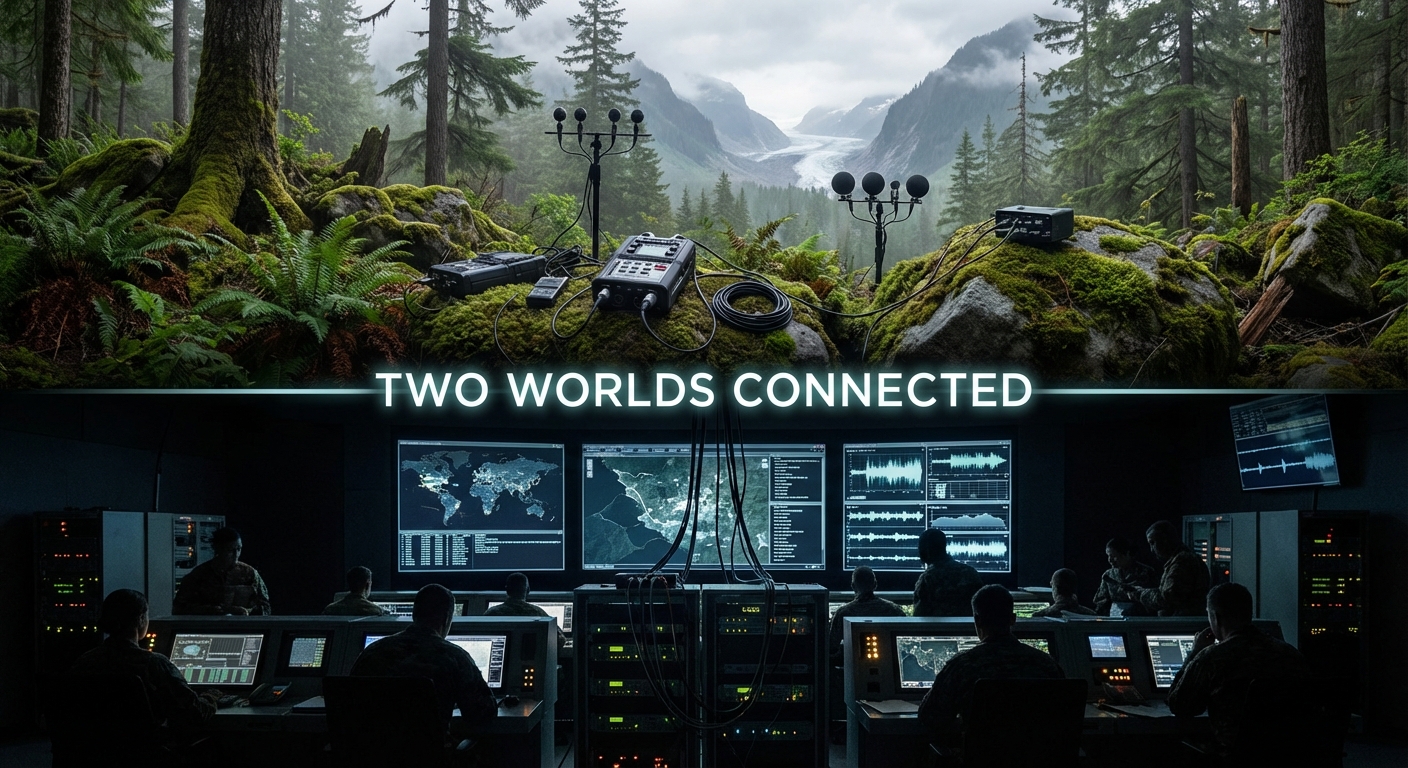
MIT Technology Review’s dual coverage of acoustic environmental monitoring and AI-assisted military targeting sits at an instructive contrast. On one side, AI is being used to detect calving glaciers and wildfire signatures from sound data, a straightforward beneficial application. On the other, the same class of models is informing lethal targeting decisions in active conflict, with accountability structures that remain opaque to the public.
The piece is worth reading as a map of where the accountability gap in AI deployment is sharpest. The regulatory frameworks that govern AI in consumer and enterprise settings are largely silent on military applications, and that silence is becoming harder to ignore as deployments become operational rather than experimental.
Understanding AI and Learning Outcomes (4 min read)

OpenAI’s Learning Outcomes Measurement Suite attempts to build a standardized framework for measuring whether AI actually improves student performance, rather than relying on survey data or engagement metrics. The tool is designed for educators and researchers rather than end users, which is the right instinct: the education AI market is crowded with products making unverified claims.
If this framework gains adoption, it shifts the competitive dynamic for AI education tools from feature marketing to measurable performance. Vendors who cannot demonstrate improvement on these metrics will face procurement pressure. That is a healthier market structure than currently exists, and worth tracking as it develops.
From the Field
Fireflies and Otter Launch MCP Connectors, but Practitioners Are Looking at Self-Hosted Alternatives

Both Fireflies and Otter.ai have released Model Context Protocol connectors that let Claude access meeting data, but practitioners in the thread are flagging an obvious problem: both implementations are closed-source and cloud-only, which means sensitive meeting recordings and transcripts are routed through additional third-party infrastructure. For anyone working with clients in regulated industries, that is a non-starter.
The open-source alternative surfaced in the thread is Vexa, a self-hostable MCP server that keeps meeting data on your own infrastructure. The adoption of MCP as a de facto standard for tool integration is moving faster than most privacy reviews can track. Teams that have not audited which new connectors their staff are activating should do so now.
What Happens to Qwen After Junyang Lin’s Departure?

Junyang Lin, the technical lead who drove Qwen’s rise to competitive relevance in the open-weight model space, has stepped down from Alibaba’s AI project. The community discussion is cautious: Lin’s departure follows the Qwen 3.5 small model release, and there is no public indication yet of what direction the project takes under new leadership.
For teams that have made Qwen models a dependency in their stack, the instability warrants attention. Leadership transitions at model labs often precede strategic pivots, and Alibaba’s broader AI priorities may not align with maintaining Qwen’s current release cadence. Diversifying model dependencies is sound practice regardless, but more so now.
What Colgate-Palmolive’s Internal AI Lab Gets Right
Ethan Mollick highlights the results coming out of Colgate-Palmolive’s dedicated AI Lab, led by a company veteran who understands both the technology and the organization’s internal culture. The structure, a permanent internal team led by someone with institutional knowledge rather than an external consultant engagement, is producing measurable results where many comparable initiatives have stalled.
The pattern is consistent across large-company AI deployments that actually work. The variable that correlates most strongly with success is not the model used or the budget allocated: it is whether the person running the effort understands the company’s actual workflows well enough to know where AI creates genuine leverage. That person rarely exists on a consulting engagement.
Voices
@emollick writes that GPT-5.2 Pro functions as a capable fact-checker, working through written content to surface objections, caveats, and mathematical errors automatically. He notes that outside narrow domains like academic publishing and New Yorker editorial, this level of systematic review “was not possible pre-AI.” The implication for anyone producing high-stakes written work is direct: a check that previously required a specialist editor or a subject matter expert is now available on demand, and skipping it is a choice rather than a constraint.
@ylecun retweeted research from his team announcing foundation models built from scratch with vision as a primary modality, not an add-on. The thread covers visual representations, data pipelines, world modeling, architecture choices, and scaling behavior across nine posts. LeCun has been consistent in arguing that language-only modeling is insufficient for general intelligence; this research represents a concrete step in that direction rather than a theoretical position.
@steipete retweeted the announcement that the Codex app is now live on Windows, running both natively and inside WSL, with a Windows-native agent sandbox that restricts filesystem writes and blocks outbound network access by default. The security architecture is worth noting: most AI coding tools on Windows have not addressed sandbox isolation at the OS level. This sets a higher baseline for what safe agent execution on developer machines should look like, and will likely influence how competitors approach the same problem.
Business Intelligence
Small Business
Google Canvas inside Search is now available to you at no additional cost, and it is more capable than it sounds. If your business regularly produces proposals, internal plans, or client-facing documents, this is a meaningful upgrade to a tool you are already using. The key advantage over dedicated tools like Notion AI or Jasper is the live search integration: Canvas can pull current information into what it generates rather than working only from a training cutoff. For a small team without a dedicated research function, that closes a real gap.
The Anthropic situation with military contracts carries a less obvious implication for small businesses that have embedded Claude into client-facing workflows. If reputational pressure on Anthropic intensifies, the company may shift its usage policies in ways that affect commercial access or pricing. It is worth knowing which of your workflows depend on a specific provider and which could transfer to an alternative with minimal disruption. That audit costs nothing and reduces future exposure.
On the physical AI story: if you operate in logistics, light manufacturing, or any sector where manual repetitive tasks are a cost center, the economics of automation are shifting faster than most small operators have updated their projections. You do not need to act immediately, but the assumption that automation is only viable at enterprise scale is becoming less accurate each quarter.
Mid-Market
The MCP connector story from Fireflies and Otter is a vendor decision prompt. If your company uses AI meeting tools and is now connecting them to language model workflows via MCP, someone needs to audit what data is being routed where. Neither Fireflies nor Otter’s MCP implementation keeps data on your infrastructure, and most of the meetings being transcribed in mid-market companies contain material that would qualify as sensitive under standard commercial confidentiality expectations, if not under formal regulation. The self-hosted alternative, Vexa, is worth evaluating before the question becomes urgent after an incident.
Google Canvas should prompt a broader vendor consolidation review. If your teams are using a mix of Notion, Jasper, Grammarly, and similar productivity AI tools, the marginal cost of those subscriptions may be harder to justify as Google and Microsoft embed comparable functionality into tools employees already use daily. This is not a reason to act immediately, but mid-market companies that have not audited their SaaS spend against what is now available in existing platform subscriptions are likely paying for redundancy.
Junyang Lin’s departure from Qwen is a signal to anyone in the mid-market who has committed infrastructure to Alibaba’s open-weight models. Leadership transitions at AI labs carry real strategic risk for downstream users: release cadence slows, fine-tuning documentation falls behind, and community support thins. If Qwen is a dependency in your stack, map an alternative now while switching costs are low.
Enterprise
The Anthropic military targeting story is a board-level governance question in waiting. If your enterprise has deployed Claude across internal functions, procurement or legal will eventually be asked whether the company has reviewed the ethical and reputational dimensions of its AI vendor relationships. The fact that Anthropic is simultaneously serving US military targeting operations and watching commercial defense clients leave is not a settled situation. It is one press cycle away from becoming a procurement risk conversation in regulated industries. A written vendor risk assessment covering the AI providers in your stack, including their end-use policies, is overdue for most enterprise environments.
The Codex Windows sandbox architecture, specifically OS-level filesystem and network access controls for AI agents, sets a new reference point for what enterprise security teams should require from AI coding tools deployed on developer machines. If you have authorized AI coding assistants across engineering teams without reviewing their sandbox implementations, that gap deserves attention. The attack surface introduced by an AI agent with broad filesystem access on a developer machine is materially different from a browser extension or a SaaS tool.
The analysis on frontier open-weight models potentially disappearing deserves a place in your next AI strategy review. Enterprise AI roadmaps that assume continued access to free frontier-capable open-weight models as a cost management lever are building on an assumption that may not hold. Procurement teams negotiating multi-year AI infrastructure contracts should factor in the possibility that open-weight model availability narrows significantly within the contract period, and structure optionality accordingly.
In Brief
- Google DeepMind releases Gemini 3.1 Flash-Lite. The new lightweight model targets high-volume, cost-sensitive deployments as the most economical option in the Gemini 3 series.
- OpenAI integrates Codex into Prism scientific writing platform. Researchers can now write, compute, analyze, and iterate in a single environment without switching between authoring and execution tools.
- DeepLearning.AI launches a JAX-based LLM training course with Google. The course covers building a 20-million parameter MiniGPT-style model from scratch using the library that powers Gemini and Veo.
- No AI model has cracked the D&D puzzle creation benchmark. Gemini 3.1 Deep Think, GPT-5.2 Pro, and Opus 4.6 all fail in different ways, pointing to a persistent gap in structured creative reasoning.
- LeCun’s team publishes research on vision-first foundation models. The nine-part thread covers architecture, data, world modeling, and scaling behavior for models built around visual understanding rather than language.
- Qwen technical lead Junyang Lin departs Alibaba. The exit follows the Qwen 3.5 small model release and leaves the project’s strategic direction uncertain at a competitive moment.
- Codex launches on Windows with native agent sandbox. The implementation uses OS-level controls to restrict filesystem writes and block network access by default, a first for AI coding tools on the platform.
Tool of the Day
Vexa is an open-source, self-hostable MCP server for meeting data, designed for teams that need to integrate transcript and meeting context into AI workflows without routing sensitive conversations through third-party cloud infrastructure. It is built for developers and IT administrators at organizations where data residency matters, including legal firms, healthcare operations, and any company with strict client confidentiality obligations. A concrete use case: connecting your internal meeting transcripts to a locally hosted language model so that project summaries, action item extraction, and client note drafting happen entirely within your own environment, with no data leaving your control.